发布日期:2026-01-29本条信息已被查看了10次
交出亮眼生态成绩单,中印尼携手共筑海底乐园 Delivering Impressive Environmental Results: China and Indonesia Join Hands to Build an Underwater Paradise
“根据我们的最新综合评估显示,这片珊瑚礁已成为一片生机勃勃的‘海底乐园’。”1月12日,新年伊始,“中印尼近海海洋生态牧场技术合作研究”项目执行负责人上海海洋大学刘必林研究员,将这一好消息与印尼合作方分享。2021年末,上海海洋大学成功获批亚洲合作资金项目——“中印尼近海海洋生态牧场技术合作研究”。项目第一期建设周期为2022至2024年,目前已进入第二期建设周期(2025–2027年)。
“According to our latest comprehensive assessment, this coral reef has transformed into a thriving ‘underwater paradise.’ ”On January 12, at the start of the new year, Researcher Liu Bilin from Shanghai Ocean University—the project leader for the “China-Indonesia Offshore Marine Ecological Pasture Technology Cooperation Research” initiative—shared this encouraging news with Indonesian partners. In late 2021, Shanghai Ocean University successfully secured approval for the Asian Cooperation Fund project—the “China-Indonesia Offshore Marine Ecological Pasture Technology Cooperation Research.” The project's first phase ran from 2022 to 2024 and has now entered its second phase (2025–2027).
打造海洋中的热带雨林
Creating a Tropical Rainforest in the Ocean
作为海洋生态系统的重要组成,珊瑚礁为众多海洋生物提供栖息、繁殖与庇护场所,科学家们将其称为“海洋中的热带雨林”。项目开展至今,上海海洋大学携手广东海洋大学、印尼哈山努丁大学等合作伙伴,深入开展珊瑚修复区划技术、珊瑚与关键增殖种类优选技术、珊瑚移植技术以及增殖养护技术等4项关键技术研究,完善养护型与增殖型海洋牧场的建设体系,在印尼邦内坦蓬岛海域为海洋生物设计和建造了一个家园。
As a vital component of marine ecosystems, coral reefs provide habitats, breeding grounds, and shelter for numerous marine species, earning them the title of “the rainforests of the ocean” among scientists. Since the project's inception, Shanghai Ocean University has collaborated with partners including Guangdong Ocean University and Hasanuddin University in Indonesia to advance research in four key technologies: coral restoration zoning techniques, selection methods for corals and key stock enhancement species, coral transplantation techniques, and stock enhancement and conservation technologies. These efforts have refined the construction systems for conservation-oriented and stock enhancement-oriented marine pastures, designing and constructing a marine habitat for marine life in the waters around Bangka Belitung Island, Indonesia. coral transplantation techniques, and enhancement and conservation methods. This work has refined the construction systems for conservation-oriented and enhancement-oriented marine ranches, creating a designed habitat for marine life in the waters around Bangka Belitung Island, Indonesia.
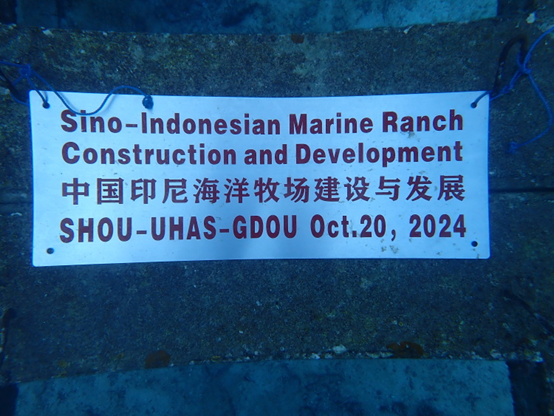
项目最直观的成果体现在海底生命的蓬勃复苏上。在印尼邦内坦蓬岛,那片于2024年10月建成的人工鱼礁区,正以前所未有的速度焕发生机。监测数据显示,至2025年10月,该区域珊瑚覆盖率已较以往提升10%;而到12月的复查中这一数字跃升至22%。这意味着,在短短一个季度内,礁石上的珊瑚“新生居民”规模翻了一番还多,标志着海底环境已变得高度稳定和适宜。“海洋牧场及邻近海域共分布珊瑚132种,以鹿角珊瑚属和滨珊瑚属为主。人工鱼礁区的珊瑚覆盖率呈持续提升趋势,这一结果表明礁体周边海域环境愈发稳定,适宜珊瑚幼体的生长繁衍。”上海海洋大学张硕教授说。
The most tangible outcome of the project is the remarkable revival of marine life. At Indonesia's Bangka Belitung Islands, the artificial reef constructed in October 2024 is flourishing at an unprecedented pace. Monitoring data shows that by October 2025, coral coverage in the area had increased by 10% compared to previous levels. By December, this figure had surged to 22%. This means that within just one quarter, the number of “new coral residents” on the reefs more than doubled, signaling that the underwater environment has become highly stable and suitable. “A total of 132 coral species are distributed across the marine ranch and adjacent waters, primarily belonging to the genera Acropora and Montipora. The sustained increase in coral coverage within the artificial reef area indicates that the surrounding marine environment is becoming increasingly stable and conducive to the growth and reproduction of coral larvae,” said Professor Zhang Shuo from SHOU.
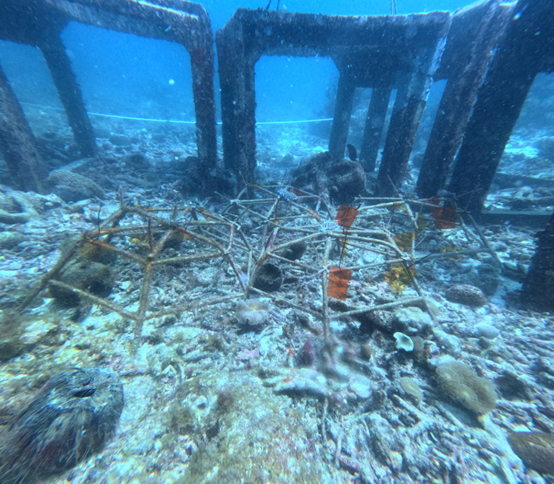
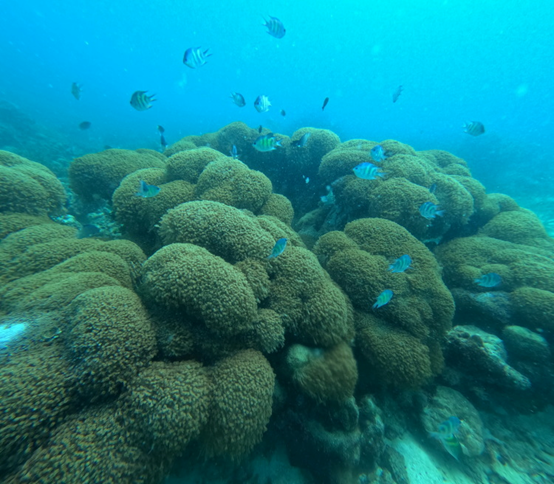
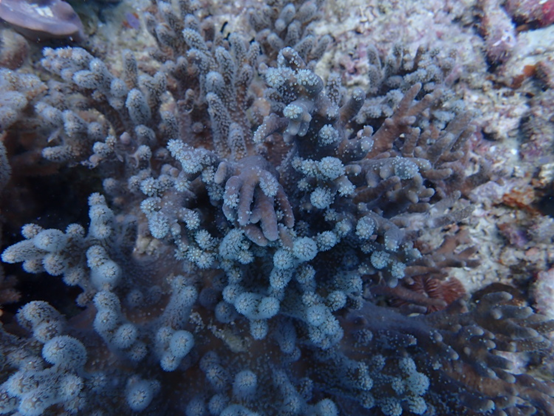
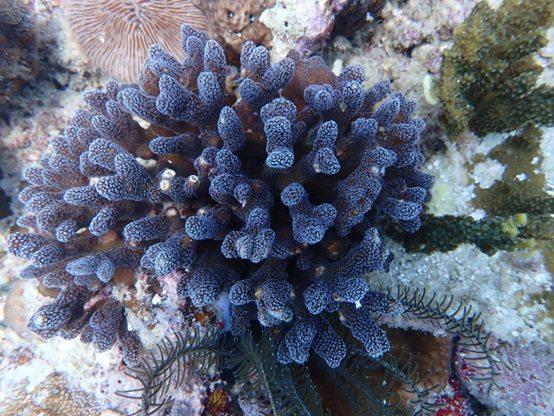
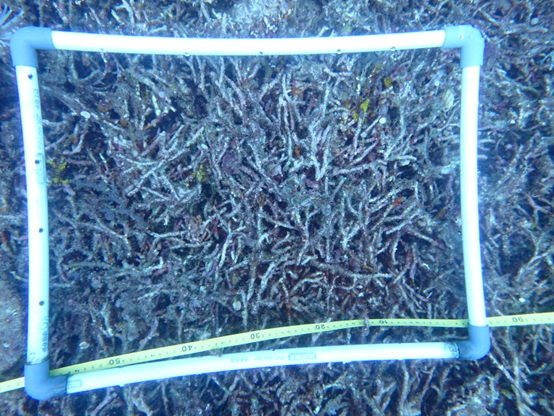
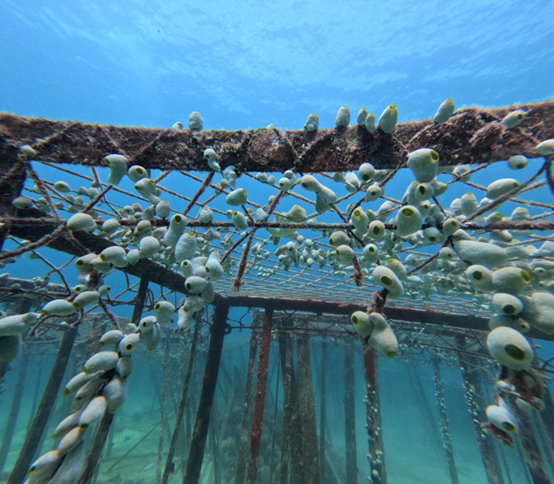
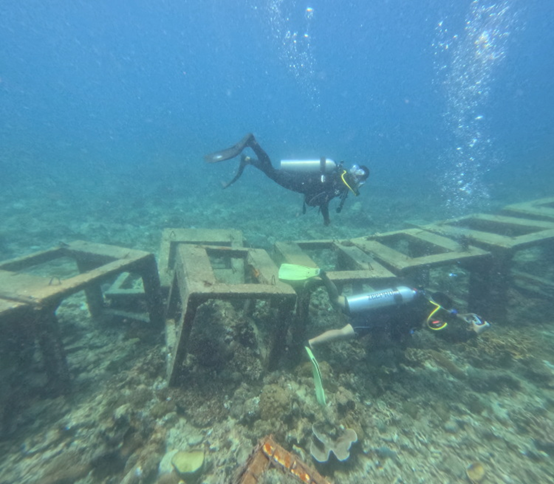
生机的复苏远不止于珊瑚的蔓延。更令中印尼团队成员们们兴奋的是整个生态系统层级的显著提升。“调查发现,八带蝴蝶鱼、杂纹鹦哥鱼等高营养级鱼类,已成为这片区域的‘常客’。”刘必林研究员说,它们的稳定栖息是一个强有力的生态信号,证明这片人工构建的栖息地,不仅提供了安全的“家园”,更已成功培育出完整的微食物链,能够支撑起更为复杂、高级的海洋生命形式。一个能够自我维持、充满活力的珊瑚礁生态系统雏形,已然显现。
The revival of vitality extends far beyond the spread of coral. What excites the Chinese-Indonesian team members even more is the significant enhancement across the entire ecosystem level. “Surveys reveal that high-trophic-level fish species such as the eight-banded butterflyfish and the multicolored parrotfish have become regular visitors to this area,” Researcher Liu Bilin explained that their stable presence serves as a powerful ecological indicator, proving that this artificially constructed habitat not only provides a secure “home” but has also successfully cultivated a complete micro-food chain capable of supporting more complex and advanced marine life forms. The outline of a self-sustaining, vibrant coral reef ecosystem has already begun to emerge.
技术与管理升级
Technology and Management Upgrades
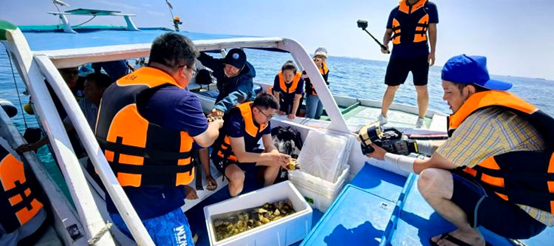
随着合作进入第二期,项目的技术内涵与管理模式也同步升级。为了更智能地守护这片珊瑚礁,项目组研发的水下双目摄像头如同不知疲倦的“生态哨兵”,突破传统海洋调查局限,从实时、精准、智能三方面深入观测人工渔礁动态环境。
As the collaboration enters its second phase, the project's technological capabilities and management model have been upgraded simultaneously. To safeguard this coral reef more intelligently, the project team has developed underwater binocular cameras that function as tireless “ecological sentinels.” These cameras overcome the limitations of traditional marine surveys, enabling in-depth observation of the artificial reef's dynamic environment through real-time, precise, and intelligent monitoring.
“我们将设备布设于渔礁核心点位,无需人工持续出海,可无间断采集高清影像,实时捕捉礁体周边鱼类活动、附着生物生长及生物分布特征变化,这就克服了传统调查的滞后性与碎片化问题。”上海海洋大学邹磊磊教授说,高清观测能力,能清晰呈现礁体状态、附着生物演替及海洋生物动态,无接触观测模式保障了数据的真实性与客观性,实现精准具象化认知。更核心的是,设备通过持续积累数据,助力挖掘海洋动态内在规律,判断渔礁生境构建进度与生态效应,解读人工渔礁与海洋生态的互动机制,还能预判生态发展趋势。同时,长期观测数据可完善当地海洋生态基础数据库,为研判渔礁长期生态价值、优化管理方式提供支撑,推动海洋牧场监测从经验驱动向数据驱动的智能化、科学化转型。
We deploy equipment at key points on artificial reefs, eliminating the need for continuous manual fieldwork. This enables uninterrupted collection of high-definition imagery, capturing real-time fish activity around reef structures, growth of attached organisms, and changes in biological distribution patterns. This approach overcomes the lag and fragmentation inherent in traditional surveys. Professor Zou Leilei of SHOU explained that high-definition observation capabilities clearly reveal reef conditions, the succession of attached organisms, and marine biological dynamics. The non-contact observation model ensures data authenticity and objectivity, enabling precise, concrete understanding. More crucially, by continuously accumulating data, the equipment aids in uncovering intrinsic patterns of marine dynamics. It helps assess the progress and ecological effects of artificial reef habitat construction, decipher the interaction mechanisms between artificial reefs and marine ecosystems, and even predict ecological trends. Simultaneously, long-term observational data enriches local marine ecological databases, supporting assessments of the long-term ecological value of artificial reefs and optimizing management approaches. This drives the transformation of marine ranch monitoring from experience-driven to data-driven, intelligent, and scientific practices.
“我们也遇到了新的挑战。监测发现,棘冠海星在局部海域密度激增,其捕食会导致珊瑚死亡率上升;人工鱼礁体上有时也会附着抑制珊瑚生长的生物。”上海海洋大学林东明高级工程师介绍道。
We have also encountered new challenges. Monitoring has revealed that crown-of-thorns starfish populations have surged in certain local waters, and their predation has led to increased coral mortality rates. Additionally, artificial reef structures sometimes host organisms that inhibit coral growth, explained Lin Dongming, Senior Engineer at SHOU.
面对挑战,项目组拿出了创新性的综合方案,对于棘冠海星,团队计划结合人工清除、定点药物注射等方法,并探索引入其天敌——波纹唇鱼进行生物防治,相当于为珊瑚礁请来了天然的守护者。对于礁体上的附着生物,则制定了“物理清除与定期维护”相结合的管理策略,犹如为这片“海底乐园”实施精细化的健康管理。
Facing these challenges, the project team devised an innovative integrated solution. For crown-of-thorns starfish, the plan combines manual removal with targeted chemical injections, while exploring the introduction of their natural predator—the wrasse—for biological control. This approach effectively brings in natural guardians for the coral reefs. For biofouling on reef structures, a management strategy combining “physical removal and regular maintenance” has been established—much like implementing meticulous health management for this “underwater paradise.”
扩大合作“朋友圈”
Expand the circle of cooperative partners
基于扎实的生态成效,项目合作正从单一的示范点建设,向体系化、网络化的深度合作拓展。项目的目标已从第一期的“技术示范”,升级为第二期构建“增殖型”与“养护型”牧场相结合的现代化体系,并完善“联合科考+牧场建设+效果评估+人才培养”的全链条合作模式。
Building on solid ecological achievements, project collaboration is expanding from single demonstration site construction to systematic, networked in-depth cooperation. The project's objectives have evolved from the first phase's “technical demonstration” to the second phase's goal of establishing a modern system integrating “regeneration-oriented” and “conservation-oriented” pastures. This phase also refines a comprehensive collaborative model encompassing “joint scientific research + pasture development + impact assessment + talent cultivation.”
这一“体系共建”的理念也体现在伙伴网络与人才培养的扩容上。项目的合作“朋友圈”已从最初的广东海洋大学、哈山努丁大学,拓展至西亚库拉大学,并计划进一步链接印尼其他优势海洋科研机构。相应地,人才培养也从招收留学生,升级为涵盖青年教师访学、博士后联合研究的系统化体系。项目已累计招收和培养了十余名印尼硕博研究生,并将范围拓展至高校青年教师;同时通过博士后联合研究、累计超600人次的技术与科普培训,旨在为印尼打造一支本土化高端渔业科技队伍。
This concept of “joint system development” is also reflected in the expansion of the partner network and talent cultivation. The project's collaborative “circle of friends” has grown from its initial partners—Guangdong Ocean University and Hasanuddin University—to include Universitas Syiah Kuala, with plans to further link with other leading marine research institutions in Indonesia. Correspondingly, talent development has evolved from recruiting international students to a systematic framework encompassing visiting scholar programs for young faculty and joint postdoctoral research. The project has cumulatively recruited and trained over ten Indonesian master's and doctoral students, expanding its scope to include young faculty members from universities. Concurrently, through joint postdoctoral research and technical/science outreach training reaching over 600 participants, it aims to cultivate a localized, high-caliber fisheries science and technology workforce for Indonesia.
从数据的跃升到技术的革新,再到合作网络的扩展,中印尼海洋牧场项目不仅成功修复了一片海,更构建了一个共商、共建、共享的蓝色合作新模式。这片日益繁荣的“海底乐园”,正是两国携手应对全球气候变化、促进海洋可持续发展的生动实践与充满希望的共同方案。
From data breakthroughs to technological innovations and the expansion of collaborative networks, the China-Indonesia Marine Pasture Project has not only successfully restored a stretch of ocean but also established a new model of blue cooperation based on consultation, joint construction, and shared benefits. This thriving “underwater paradise” stands as a vivid example and promising joint solution of the two nations working hand in hand to tackle global climate change and promote sustainable marine development.