发布日期:2026-05-25本条信息已被查看了22次
“感知中国”中外学子茶文化体验活动顺利举行 "Experience China": SHOU Hosts Immersive Tea Culture Event for Chinese and International Students
2026年5月16日,由国家留学基金委主办,上海海洋大学承办的“感知中国——‘以茶会友’讲好中国故事,助力中华优秀传统文化国际传播”中外学生社会实践与文化体验活动,在公共实验楼A402温情启幕。来自加纳、巴基斯坦、孟加拉、乌兹别克斯坦等国的40余名来华留学生齐聚一堂,以茶为媒,通过文化讲座、技艺实操、集市互动、国际对话四大环节,沉浸式领略中国茶文化的深厚底蕴与时代魅力。
SHANGHAI, May 16, 2026——Hosted by the China Scholarship Council (CSC) and organized by Shanghai Ocean University (SHOU), the Experience China: Making Friends via Tea social practice and cultural experience event kicked off warmly today in Room A402 of the Public Experimental Building. Under the theme of telling Chinese stories and promoting traditional culture globally, the event gathered over 40 international students from countries including Ghana, Pakistan, Bangladesh, and Uzbekistan. Through four interactive segments—cultural lectures, hands-on brewing, a thematic bazaar, and an international dialogue—the students immersed themselves in the rich heritage and contemporary charm of Chinese tea culture.
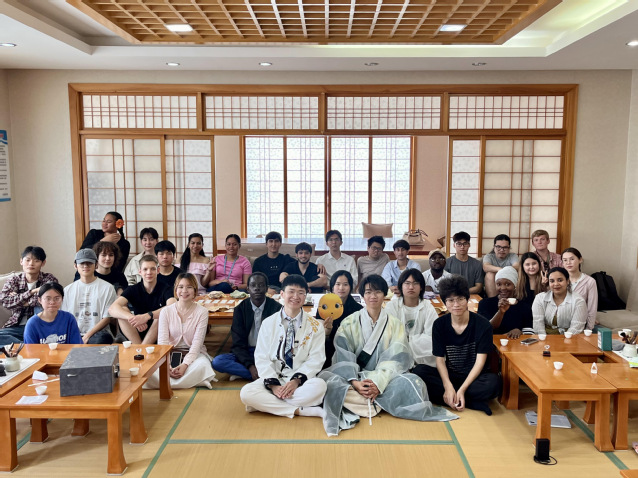
上午10时,活动正式拉开帷幕。具体负责活动的鹿鸣茶艺社特邀资深茶文化研习学长,从茶之起源、茶之特性、茶之功效、茶之礼节四大维度,为中外学子系统解读中国茶的千年故事。从神农尝百草的古老传说,到茶融入百姓日常、成为中华文明标志性文化符号;从六大茶类因发酵程度不同形成的风味差异,到茶叶中有益成分的健康价值;再到双手递杯、长幼有序、轻拿轻放等以茶表敬的礼仪细节,生动的讲解让在场学子深刻体会到茶文化中蕴含的谦逊与温情。
The event officially commenced at 10:00 AM. Senior tea culture experts from the Luming Tea Art Society delivered a comprehensive lecture, guiding the students through the history of Chinese tea across four dimensions: its origins, characteristics, health benefits, and etiquette.
The presentation traced tea’s journey from the ancient legend of Shennong tasting a hundred herbs to its integration into daily life as an iconic symbol of Chinese civilization. Speakers highlighted how differing fermentation levels create the distinct profiles of China’s six major tea categories, while also explaining the health benefits of tea’s natural components. Furthermore, the lecture introduced essential etiquette, such as presenting a cup with both hands, respecting generational hierarchy, and handling utensils with care. These vivid explanations allowed the international participants to experience firsthand the humility and warmth inherent in Chinese tea culture.
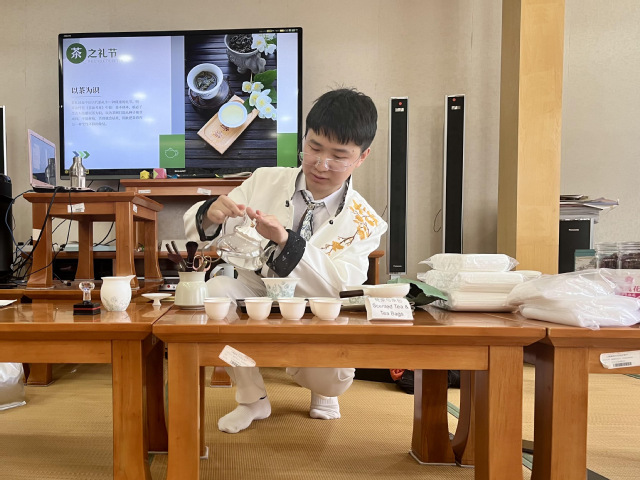
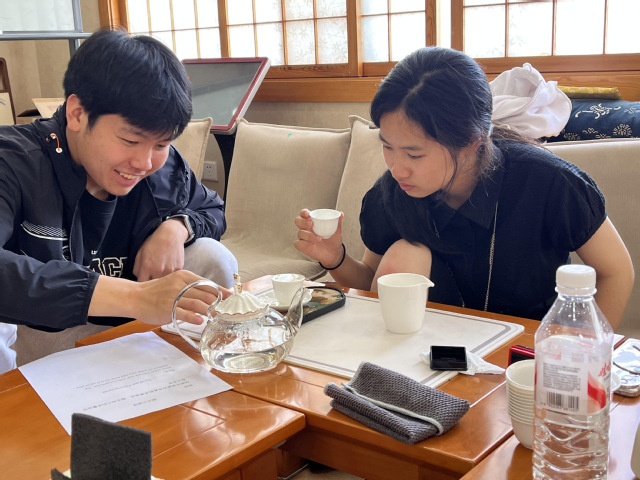
讲座结束后,学子们按绿茶、白茶、黄茶、青茶、红茶、黑茶六大茶类分组实操。每组配备对应茶类样品与简易茶具,在茶艺社成员的悉心指导下,大家逐一观察干茶形态、细闻茶香,认真学习温杯、投茶、注水、出汤等核心技艺,亲手冲泡茶汤。来自巴基斯坦的留学生Hassan Raza(哈桑)首次体验红茶冲泡,看着茶叶在热水中缓缓舒展、茶香氤氲弥漫,他不禁感慨:“这个过程太奇妙了,让人满心欢喜。”亲手冲泡、细品茶汤的过程,让学子们真切领悟到“茶性各异,泡法有别”的茶道精髓。
Following the lecture, students split into six workshops dedicated to each major tea type: green, white, yellow, oolong, black, and dark tea. Each group was equipped with tea samples and basic brewing utensils. Under the patient guidance of tea society members, the students examined dry loose leaves, savored their aromas, and mastered core techniques including warming the cups, placing the leaves, pouring water, and decanting the liquor.
Hassan Raza, an international student from Pakistan, brewed black tea for the first time. Watching the leaves unfurl in hot water as the aroma filled the air, he remarked enthusiastically, This process is magical and brings such a sense of inner peace. By brewing and tasting the tea themselves, the students gained a genuine understanding of the core philosophy: Every tea has its unique nature, and each requires a different brewing approach.
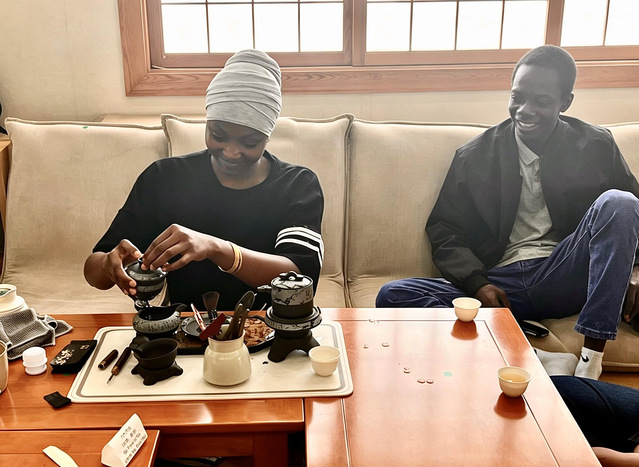
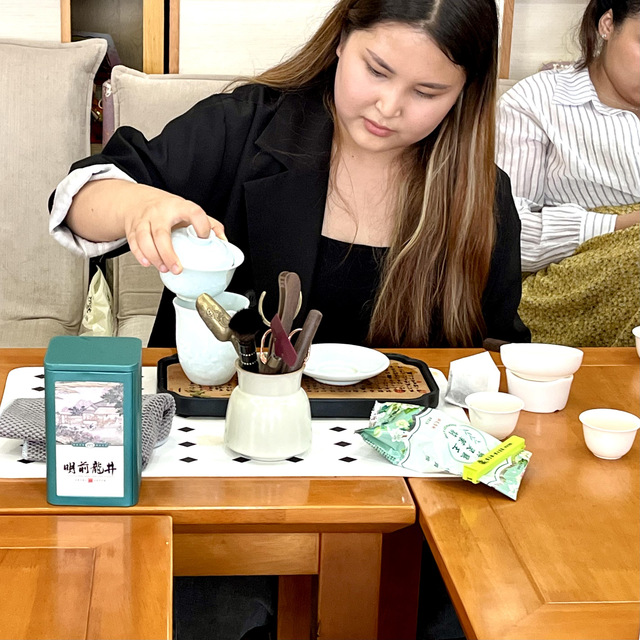
午后13:00时,活动移步日语实验教室,茶文化主题集市趣味开启。每位学子领取专属《茶文化集章卡》,穿梭于六大互动站点间打卡体验:“闻香识茶”考验嗅觉辨识力,蒙眼辨茶香尽显趣味;“品茶猜类”凭茶汤滋味匹配茶名,考验品茶功底;“泡茶挑战” 限时完成整套冲泡流程,比拼实操熟练度;“倒水游戏”练习注水稳度与水量把控,锤炼茶艺细节;人气爆棚的茶包DIY与香包DIY站点前,更是排起了长队。
At 1:00 PM, the venue shifted to the Japanese Language Experimental Classroom, which had been transformed into a bustling tea culture bazaar. Equipped with custom Stamp Collection Cards, students explored six interactive booths to complete various challenges:
Aroma Identification challenged their sense of smell to identify tea varieties while blindfolded.
Blind Tastingtested their palates by matching tea infusions to their correct names.
Brewing Challenge pitted students against the clock to complete a full brewing ritual, testing their technical proficiency.
Water Pouring Game required steady hands to master water flow and volume control.
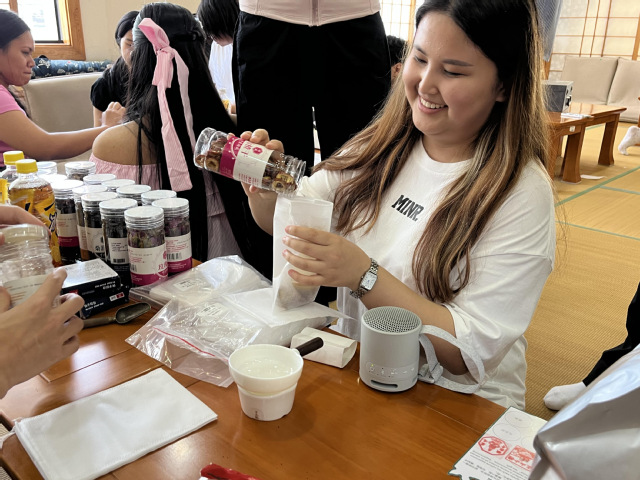
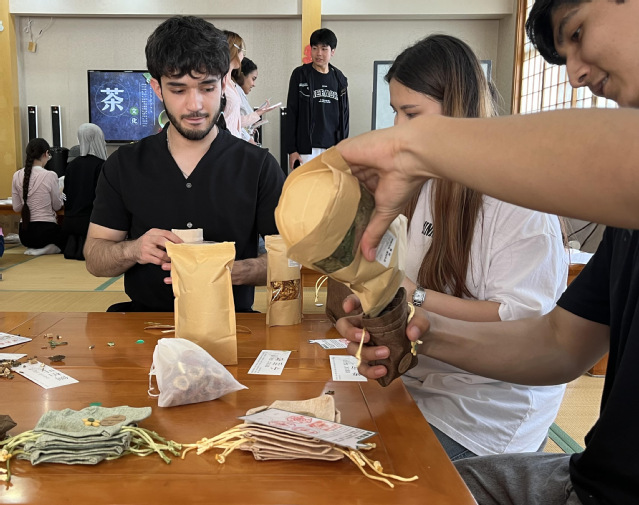
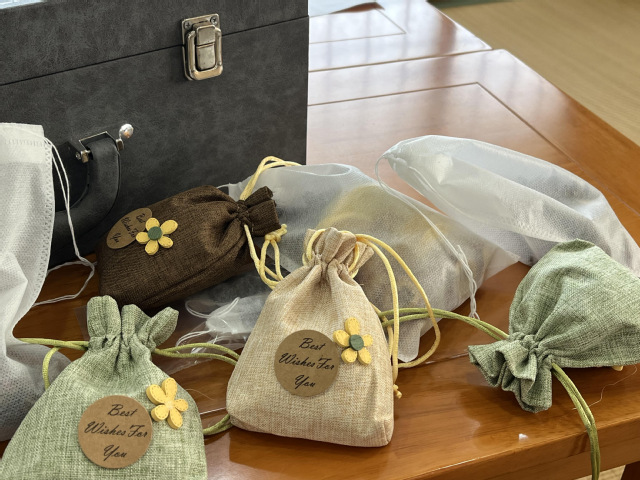
在茶包DIY站,学生们可以自选绿茶、红茶或乌龙茶作为基底,再搭配桂花、陈皮、玫瑰、薄荷等花果原料,亲手装袋封口,制作专属拼配茶包。而在香包DIY站,桌上摆放了艾草、丁香、薄荷、白芷等中药材,学生们在工作人员的指导下,将药材按喜好配比装入绣花香囊中,既可驱蚊安神,又蕴含中医“芳香避秽”的智慧。“以前只觉得喝茶是一种习惯,没想到茶叶和药材还能这样结合。”来自孟加拉国的Tahmina Akhter(塔米娜)一边缝香包一边说。这两个站点前始终排着长队,不少学生完成一个后还想再做第二个。
The DIY tea bag and DIY sachet stations proved to be the crowd favorites, drawing long lines of eager participants. At the DIY tea bag booth, students selected green, black, or oolong tea as a base and blended it with osmanthus, dried tangerine peel, rose, or mint to seal their custom blends. Meanwhile, the DIY sachet station featured traditional Chinese medicinal herbs like mugwort, clove, mint, and angelica. Guided by staff, students filled embroidered pouches with custom herbal ratios—a practice that serves as a natural mosquito repellent and calming aid, embodying the traditional Chinese medicine wisdom of using aromatics to ward off impurities.
I used to think drinking tea was just a daily habit, but I never expected tea leaves and herbs could be combined like this, said Tahmina Akhter from Bangladesh while sewing her sachet. The two stations remained highly popular, with many students lining up a second time to make another creation.
集齐所有印章后,中外学子围坐畅谈,开启一场轻松热烈的跨文化对话。加纳留学生Kwame Addo(夸梅)分享家乡姜茶与香料红茶的待客礼仪;乌兹别克斯坦留学生 Shukhrat Karimov(舒赫拉特)介绍当地绿茶搭配馕与果酱的独特饮法;中国学子则娓娓讲述各地“客来敬茶”“以茶会友”的民俗故事。各国饮茶习俗在交流中碰撞交融,文化隔阂悄然消融,情谊在茶香中愈发浓厚。
After collecting all their stamps, the Chinese and international students gathered for a relaxed and lively cross-cultural dialogue. Kwame Addo from Ghana shared his hometown’s hospitality customs involving ginger tea and spiced black tea, while Shukhrat Karimov from Uzbekistan introduced how locals pair green tea with traditional naan and fruit jam. In turn, Chinese students shared folk stories about welcoming guests with tea and building friendships over a brew. As global tea traditions converged and interacted, cultural barriers dissolved, and friendships deepened over the shared aroma of tea.
本次活动通过“听、看、做、玩、聊”五位一体的设计,让抽象的中国茶文化变得可闻、可尝、可动手、可带走。每位学生最终都带走了一包自制的拼配茶、一个中药香包以及一张盖满印章的集章卡,将中华优秀传统文化的记忆延续到日常生活中。
By integrating listening, observing, practicing, playing, and conversing, this event transformed the abstract concepts of Chinese tea culture into something tangible that students could smell, taste, practice, and take home. Each participant departed with a custom tea blend, an herbal sachet, and a fully stamped collection card, carrying the memories of Chinese traditional culture into their daily lives.
未来,上海海洋大学将持续深耕“感知中国”国情教育实践,不断丰富活动形式、创新文化传播路径,助力来华留学生读懂中国、爱上中国,成为中华文化的传播者、中外文明互鉴的友好使者,让中国故事、上海声音借文化之翼走向世界。本次茶文化活动,既是学校响应国家留学基金委号召、推动来华留学教育提质增效的生动实践,更是以茶为桥、文明互鉴、美美与共的美好见证。
Looking ahead, Shanghai Ocean University will continue to deepen its Experience China national conditions education initiatives. By diversifying event formats and innovating cultural communication channels, SHOU aims to help international students better understand and appreciate China. The university strives to empower them to become ambassadors of Chinese culture and facilitators of mutual learning between civilizations, helping China's stories and Shanghai’s voice resonate globally. This tea culture event serves not only as a vivid example of SHOU’s commitment to enhancing international education in response to the CSC’s initiative, but also stands as a beautiful testament to mutual learning and cultural harmony built over a simple cup of tea.
(供稿:经济管理学院、鹿鸣茶艺社)
(Contributed by the College of Economics and Management & the Luming Tea Art Society)