发布日期:2026-11-17本条信息已被查看了16次
China-Indonesia Marine Ranching Project Led by CHEN Xinjun Selected for 7th Global Poverty Reduction Initiative Recommended Case
11月11日,2026全球减贫伙伴研讨会在北京举行,主题为“深化伙伴关系,创新减贫路径”。会上揭晓第七届“全球减贫案例征集活动”推荐案例名单,由上海海洋大学联合农业农村部对外经济合作中心申报、陈新军教授牵头,联合广东海洋大学、印度尼西亚哈山努丁大学共同实施的“海洋生态牧场技术合作促进印尼渔民减贫——中印尼技术合作实践”成功入选126个全球推荐案例,为国际“蓝色减贫”提供中国科技合作方案。
On November 11, the 2026 Global Poverty Reduction Partners Seminar was held in Beijing under the theme of “Deepening Partnerships and Innovating Poverty Reduction Pathways”. The list of recommended cases for the 7th Global Poverty Reduction Case Collection Initiative was unveiled at the seminar. Entitled Marine Ecological Ranching Technology Cooperation for Poverty Alleviation among Indonesian Fishermen — A China-Indonesia Practical Cooperation Initiative, the project was jointly submitted by Shanghai Ocean University and the Foreign Economic Cooperation Center of the Ministry of Agriculture and Rural Affairs. Led by Professor CHEN Xinjun and implemented together with Guangdong Ocean University and Hasanuddin University of Indonesia, it was selected among the 126 global recommended cases. The project offers a Chinese science and technology cooperation solution for international “blue poverty alleviation”.
第七届“全球减贫案例征集活动”由中国国际减贫中心、世界银行、联合国粮食及农业组织等7家国际机构联合发起,共收到来自31个国家和地区的890篇参评案例,经多机构联合评审选出126项推荐案例,面向全球分享各国减贫发展实践经验,助力落实联合国2030可持续发展议程。本次入选案例集中涌现数智技术、生态科技赋能减贫的创新实践,中印尼海洋生态牧场合作是海洋科技助力跨境减贫的典型代表。
The 7th Global Poverty Reduction Case Collection Initiative was jointly launched by seven organizations including the International Poverty Reduction Center in China, the World Bank and the Food and Agriculture Organization of the United Nations (FAO). A total of 890 entries were submitted from 31 countries and regions. Following joint review by multiple institutions, 126 recommended cases were selected to share global experiences in poverty reduction and development, advancing the implementation of the UN 2030 Agenda for Sustainable Development. This batch of selected cases features innovative poverty-reduction practices empowered by digital, intelligent and ecological technologies. The China-Indonesia marine ecological ranching cooperation stands out as a typical example of cross-border poverty alleviation enabled by marine science and technology.
印度尼西亚作为群岛国家,海洋资源禀赋优越,但受气候变化、过度捕捞影响,近海生态系统退化、渔业资源衰退,渔民生计面临较大压力。该项目紧扣共建“一带一路”倡议与印尼“全球海洋支点”构想对接合作框架,落实中印尼海洋命运共同体建设相关共识,在中国亚洲合作资金下,自2022年起在印尼南苏拉威西省望加锡市Bonetambung岛(博内坦布岛)打造海洋生态牧场示范点,探索“生态修复 资源增殖 收入增长”的蓝色减贫新模式。
As an archipelagic nation, Indonesia is endowed with abundant marine resources. However, affected by climate change and overfishing, its coastal ecosystems have degraded and fishery resources declined, putting great pressure on the livelihoods of fishing communities. Aligned with the cooperation framework linking the Belt and Road Initiative and Indonesia’s Global Maritime Fulcrum vision, and in pursuit of the consensus on building a China-Indonesia Marine Community with a Shared Future, the project has developed a marine ecological ranching demonstration site on Bonetambung Island, Makassar, South Sulawesi Province, Indonesia since 2022 under the framework of China’s Asian Cooperation Fund. It explores an innovative blue poverty alleviation model featuring “ecological restoration, stock enhancement and income growth”.
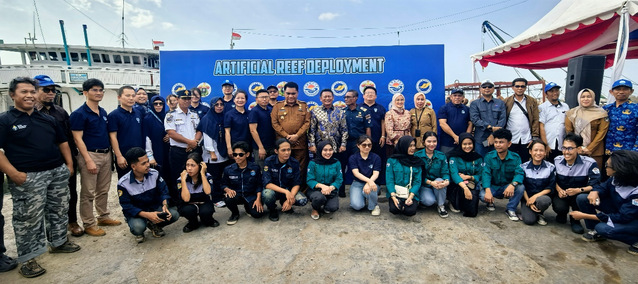
项目实施过程中,中印尼联合团队先后开展多轮海域水文、海底底质实地勘察,走访当地水产市场调研渔获品类与市场需求,针对印尼热带海域特征优化设计5类人工鱼礁礁体;完成240个人工鱼礁投放,建成650空方人工鱼礁礁区,增殖放流经济鱼苗2万尾、贝苗400粒,建成印尼南苏拉威西省首个海洋生态牧场示范点。
During project implementation, the China-Indonesia joint team conducted multiple field surveys on marine hydrology and seabed sediment conditions, and visited local aquatic markets to investigate catch species and market demand. Tailored to the characteristics of Indonesia’s tropical marine waters, five types of artificial reef modules were optimized and designed. A total of 240 artificial reefs were deployed, forming a reef area with a volume of 650 cubic metres. The team also released 20,000 commercial fish fry and 400 shellfish seeds, establishing the first marine ecological ranching demonstration site in South Sulawesi, Indonesia.
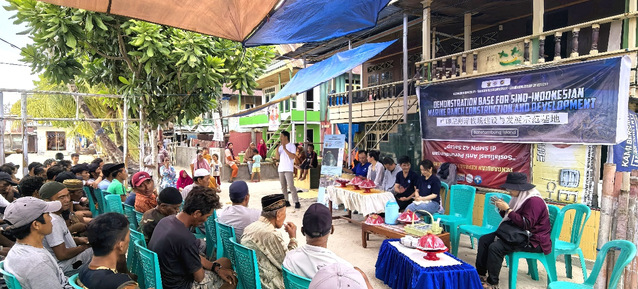
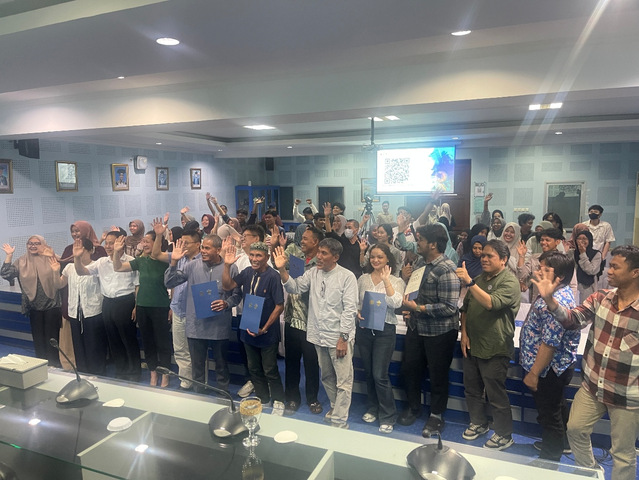
坚持“授人以渔”,项目把人才培养作为长效减贫关键抓手。连续四年开设海洋牧场技术培训班,累计培训当地科研人员、政府从业者、渔民、在校学生789人次;采用双导师制招收培养印尼博士研究生3名、硕士研究生13名,开展中学海洋科普,提升当地社区海洋保护意识。当地渔民自发约定牧场海域每年实行三个月休渔期,构建起社区参与式海洋管护机制。
Adhering to the philosophy of “teaching people how to fish”, the project takes capacity building as a key measure for long-term poverty alleviation. Marine ranching technical training courses have been held for four consecutive years, training a total of 789 local researchers, government practitioners, fishers and students. Under a dual-supervisor system, 3 Indonesian PhD students and 13 master’s students have been recruited and supervised. Marine science outreach activities have also been carried out in secondary schools to raise local communities’ awareness of marine conservation. Local fishers have voluntarily agreed to a three-month fishing moratorium each year within the ranching waters, establishing a community-based marine governance mechanism.
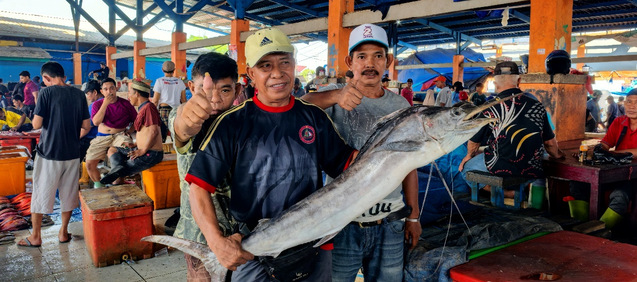
如今示范区海域海洋生物多样性显著提升,一些当地物种重新出现。当地渔民日均渔获量由建设前2-3公斤提升至5-7公斤,渔获量与渔民收入实现翻番,渔民项目满意度达93%。项目成果获得印尼海洋与渔业部、中国驻印尼大使馆等多方肯定,20余家印尼主流媒体对该项目进行报道宣传。
Marine biodiversity in the demonstration zone has seen remarkable improvements, with a number of native species making a comeback. The average daily catch of local fishers has increased from 2-3 kg prior to the project to 5-7 kg. Both catch volume and fisher income have doubled, and the project satisfaction rate among fishers reaches 93%. The project achievements have won recognition from the Ministry of Marine Affairs and Fisheries of Indonesia, the Chinese Embassy in Indonesia and other relevant parties. Over 20 mainstream Indonesian media outlets have reported on the initiative.
项目创新搭建实体合作平台,共建“海洋渔业可持续发展合作研究中心”以及“中印尼海洋牧场联合创新基地”,将两国战略共识转化为蓝色生产力,既助力印尼践行蓝色经济发展目标,也为广大发展中国家提供可复制、可推广的海洋生态修复与民生改善协同发展合作范式,丰富全球海洋治理与减贫发展实践路径。
The project has innovatively established physical cooperation platforms, namely the Joint Research Center for Sustainable Development of Marine Fisheries and the China-Indonesia Joint Innovation Base for Marine Ranching. It translates the strategic consensus between the two countries into blue productivity. While supporting Indonesia in advancing its blue economic development goals, the project offers a replicable and scalable cooperation model that integrates marine ecological restoration and livelihood improvement for other developing countries, and enriches practical approaches to global ocean governance and poverty reduction.
据了解,“全球减贫案例征集活动”自2018年启动以来,累计征集案例5470余篇,评选推荐案例763篇,覆盖93个国家和地区。本次入选后,该案例将通过案例集出版、可视化科普产品等形式向全球推广,向世界讲好海洋科技国际合作助力共同发展的中国故事,为全球发展倡议落地贡献智慧力量。
It is learned that since its launch in 2018, the Global Poverty Reduction Case Collection Initiative has received more than 5,470 submissions and selected 763 recommended cases covering 93 countries and regions. Following this selection, the case will be promoted worldwide through publications of case compendiums, visual science communication products and other channels. It tells to the world China’s story of international marine science and technology cooperation for common development, and contributes insights and strength to advancing the implementation of the Global Development Initiative.
(供稿:海洋生物资源与管理学院)
Contributed by: College of Marine Living Resource Sciences and Management